


Zygomatic & Pterygoid Full-Mouth Dental Implants Dental Implants

FIXED IMPLANT TEETH
FULL UPPER OR LOWER

65 + Years
Team experience
10000 +
Smiling patients
30000 +
Implants placed.




Zygomatic & Pterygoid Full-Mouth Dental Implants
Many patients are told they don't have enough upper jawbone for dental implants — especially if they've worn dentures for years, have a history of periodontal disease, or have experienced multiple failed bone grafts.
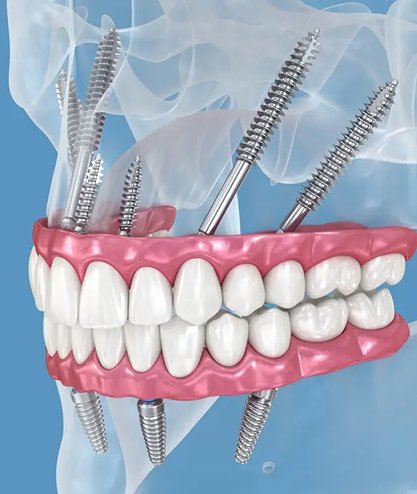
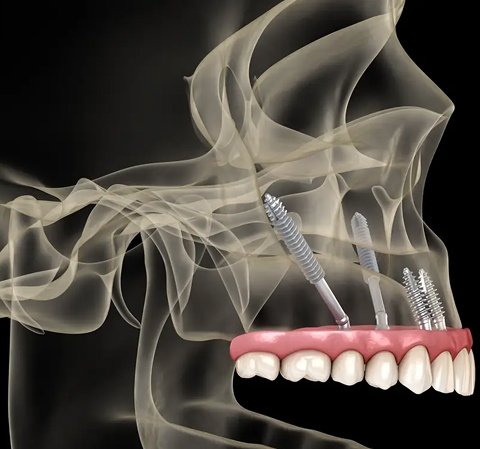
Zygomatic and pterygoid implants are advanced full-mouth solutions designed specifically for these cases. Instead of placing implants in weak or missing bone, these specialized implants anchor securely into:
-
 The zygoma (cheekbone) — extremely dense and strong
-
The pterygoid plate — solid bone located behind the upper
jaw
This allows our specialists to restore a full upper arch without bone grafting or sinus lifts, and in most cases, deliver fixed teeth in a day.
Who Are Zygomatic & Pterygoid
Implants For?
These implants are ideal for patients who have:
-
Severe upper jaw bone loss
-
Been told they are not candidates for traditional implants
-
Failed All on 4 or older implant procedures
-
Long-term denture use
-
Soft, hollow, or thin jawbone
-
Extensive sinus enlargement
-
History of failed bone grafts or sinus lifts
-
Advanced periodontal disease
If you've been turned away elsewhere, this treatment may still offer a fixed full-mouth solution.
Why Choose Zygomatic or Pterygoid Implants?
1. No Bone Grafting Needed
No sinus lift, no major grafts, and no 12—18 month waiting period.
2. Fixed Teeth in a Day
Even with severe bone loss, fixed teeth can be delivered in a day.
3. Anchorage in Dense Bone
Zygomatic and pterygoid implants anchor in dense bone outside the areas of severe upper-jaw bone loss.
4. Excellent Success Rates
Clinical studies show 95—97% long-term success, even in extremely compromised bone.
5. Life-Changing for Denture Wearers
These implants allow patients to avoid:
- Loose or unstable dentures
- Palate coverage
- Adhesives
- Difficulty eating
And transition to permanent, fixed teeth.
Our Specialist-Led Approach
At Dallas Full Mouth Dental Implant Center, these procedures are performed by highly trained surgical and prosthetic implant specialists who focus exclusively on full-arch reconstruction. Our team uses:
-
3D CBCT scans
-
Fully digital implant planning
-
Guided surgical techniques
-
On-site laboratory collaboration
-
Advanced zirconia and NanoCeramic materials
This allows coordinated surgical planning, precise implant placement, and customized restorative treatment.
The Zygomatic / Pterygoid Implant Process
-
1 Examination & 3D Imaging
A specialist evaluates your bone structure with advanced CBCT imaging.
-
2 Digital Treatment Planning
Your upper arch is digitally mapped for implant placement and fixed teeth.
-
3 Implant Placement
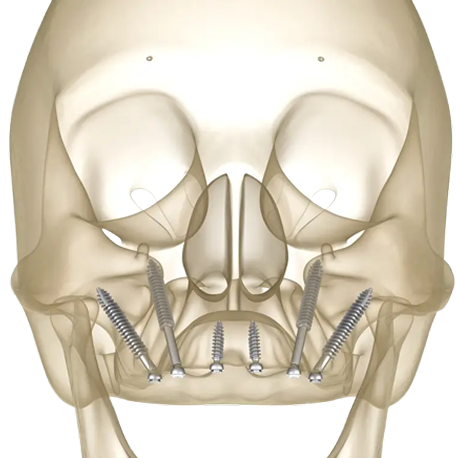
Zygomatic and/or pterygoid implants are placed in strong, dense bone beyond the sinus.
-
4 Fixed Teeth in a Day
A fixed full-arch bridge is delivered in a day and produced in our on-site digital lab.
-
5 Final Zirconia Teeth
After healing, you receive your final, custom-designed zirconia
prosthesis.
FAQs: Zygomatic & Pterygoid Implants
1. What are zygomatic implants?
Zygomatic implants are long dental implants that anchor into the cheekbone (zygoma) instead of the upper jawbone.
Cheekbone is extremely dense, making it ideal for patients with severe bone loss.
2. What are pterygoid implants?
Pterygoid implants are placed into the pterygoid plate, a dense bone structure behind the upper jaw. They provide strong anchorage for full-arch
restorations when the upper jawbone has experienced significant bone loss.
3. Who needs zygomatic or pterygoid implants?
Patients with severe upper jaw bone loss who have been told they are not candidates for traditional dental implants. This includes patients with a history of failed bone grafts, long-term denture wearers, and those with advanced periodontal disease.
4. Are zygomatic implants safe?
Yes. Zygomatic implants have been used for over 25 years with clinical studies showing 95-97% long-term success rates. The procedure is performed by highly trained specialists using 3D imaging and guided surgical techniques.
5. Do zygomatic implants hurt more than regular implants?
The procedure is performed under appropriate anesthesia or sedation, so most patients report similar comfort levels to standard implant procedures. Post-operative discomfort is typically managed with prescribed medications and subsides within a few days.
6. How long do zygomatic implants last?
With proper care and maintenance, zygomatic implants are designed to be a long-term solution.
7. Can zygomatic implants fail?
While rare, complications can occur as with any surgical procedure. Clinical studies show success rates of 95-97%, making zygomatic implants one of the most reliable solutions for patients with severe bone loss.
8. What is the recovery like after zygomatic implants?
Most patients experience moderate swelling and discomfort for the first few days. A soft diet is recommended during the initial healing period. Most patients return to normal activities within one to two weeks.
9. What do the final teeth look like?
The final prosthesis is custom-designed to look and function like natural teeth. Options include full zirconia or NanoCeramic materials, both of which provide a natural appearance with exceptional durability.
Schedule Your Consultation Today
If you've been told you're not a candidate for traditional implants because of severe bone loss, zygomatic and pterygoid implants may still make fixed teeth possible.
Schedule Your Consultation